
Managing for impact: the role of providers’ associations in shaping the future of healthcare
29 June 2026
Introduction: beyond representation
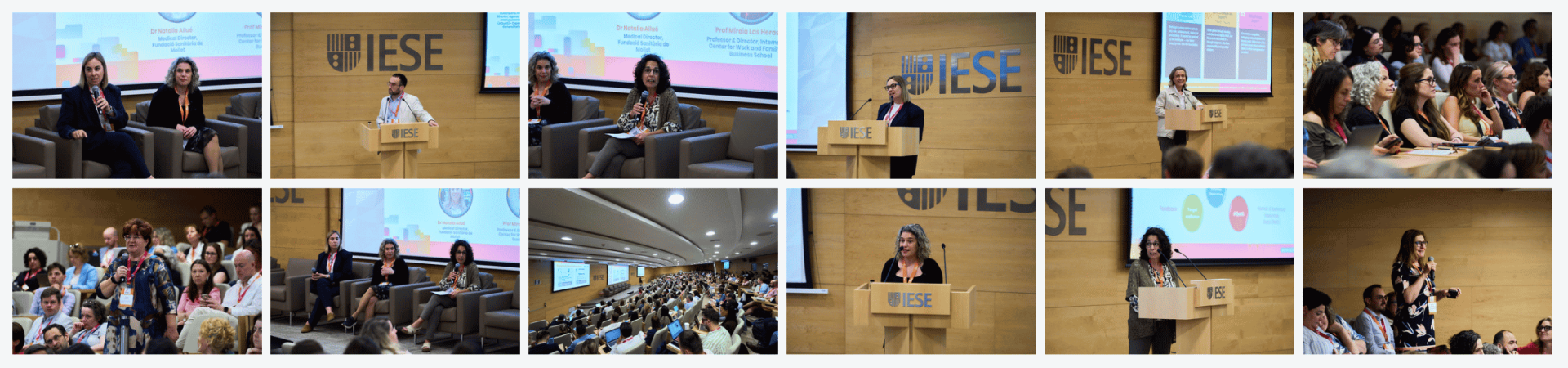
In increasingly complex healthcare systems, the role of providers’ associations is often underestimated. Yet, these organisations sit at a critical intersection, connecting healthcare providers, policymakers, and society. A premier example of this collective leadership in action was on full display during our recent plenary session, where we were joined by our conference co-host, The Catalan Hospital, Health and Social Services Association (La Unió).
Founded in 1975, La Unió is a non-profit association that brings together more than one hundred healthcare and social service providers across Catalonia, spanning hospitals, primary care, mental health services, and long-term care. Its members are diverse in ownership and governance, ranging from public entities to private foundations and social organisations, yet share a common mission: to contribute to a high-quality, sustainable healthcare and social system. From its inception, and as underscored throughout the plenary discussions, La Unió has been far more than a representative body. It acts as a platform for collective intelligence, a driver of innovation, and a facilitator of professional management practices across the entire ecosystem.
A distinct approach to healthcare management
At the core of La Unió’s activity lies a specific understanding of healthcare management: one that goes beyond administrative efficiency and focuses on outcomes, professionalisation, and adaptability. The Catalan healthcare model, in which La Unió plays a key role, is built on a plurality of providers operating within a publicly funded system. In this context, management autonomy is seen not as a privilege but as a tool to respond effectively to local needs and improve results.
This perspective challenges traditional assumptions. Evidence generated within the sector suggests that health outcomes depend more on the quality of management than on the ownership of the organisation. Such a statement redefines the debate, shifting the focus from public versus private to how organisations are governed, managed, and evaluated. La Unió actively promotes this approach through a combination of benchmarking and shared learning initiatives across member organisations, targeted training and development programmes aimed at strengthening management competencies, and strategic advisory and consulting services designed to improve overall organisational performance. Management, in this context, becomes a collective capability rather than an isolated function.
Advocacy, collaboration, and system-level impact
Beyond supporting its members, La Unió plays a significant role in shaping the broader healthcare ecosystem. As a providers’ association, it participates in and represents providers in negotiations with public authorities and other stakeholders. It also acts as an institutional voice, advocating for policies that strengthen the healthcare and social model in Catalonia. This dual function, supporting members while influencing policy, requires a delicate balance that demands both technical expertise and the ability to build consensus among diverse actors.
Importantly, La Unió operates with a strong emphasis on collaboration. It fosters networks between healthcare providers, industry partners, and innovation ecosystems, facilitating the exchange of knowledge and the development of joint initiatives. In doing so, it helps to bridge gaps that often hinder system transformation, particularly those between policy and practice, between innovation and implementation, and between individual organisations and system-wide priorities.
Current challenges: scale, influence, and transformation
Despite widespread recognition of the need for healthcare transformation, one of the persistent challenges lies in the scale and pace of collective action. Organisations like La Unió are well-positioned to drive change, yet their impact depends on the alignment of multiple stakeholders, including governments, providers, professionals, and wider society.
The sector faces several key challenges that require renewed urgency. These include ensuring sustainable financing while maintaining quality and equity, integrating health and social care services to better address complex patient needs, accelerating digital transformation and innovation adoption, and strengthening the healthcare workforce alongside management capabilities. These are not new issues, but the primary risk is not a lack of awareness; rather, it is insufficient coordinated action at scale.
Looking ahead: a call for collective leadership
The future of healthcare systems will depend not only on technological advances or policy reforms, but on the quality of leadership and management across organisations. Providers’ associations such as La Unió have a crucial role to play in this regard. Their added value lies in creating shared frameworks for action, promoting evidence-based management practices, enabling collaboration across organisational boundaries, and acting as trusted intermediaries between providers and policymakers. However, this role cannot be fulfilled in isolation.
As we move forward, there is a clear need to strengthen collaboration within and across healthcare systems. Policymakers, providers, professionals, and associations must work together to scale what works, address what does not, and build more resilient and adaptive models of care. True engagement is essential, requiring individuals and organisations to join collaborative initiatives and professional networks, share data, experiences, and best practices, support efforts to professionalise healthcare management, and actively contribute to shaping policies that reflect real-world challenges. Only through collective commitment can we ensure that management becomes a true lever for improving health outcomes and responding to the evolving needs of society.
Conclusion
La Unió exemplifies how a providers’ association can go beyond representation to become a catalyst for transformation. By promoting professional management, fostering collaboration, and advocating for a strong healthcare model, it contributes to shaping a system that is both effective and sustainable. In a time of growing uncertainty and complexity, such organisations remind us that the future of healthcare is not only about resources or structures, it is fundamentally about how we manage them, together.
Watch the recording of the plenary session ‘From data to decisions: making health information systems work for everyone’ at EHMC 2026.
Recent News
The invisible epidemic: why European health systems are missing two silent killers of older adults


Drug diversion in hospitals: why Europe needs a digital response
What our Members say
I have been active in EHMA since the first years of the '90s and I have seen its evolution from a small association of members interested in sharing knowledge on health management practices to the current status of reference and advisory key player for EU, health systems and organisations, stakeholders associations, industry and universities. EHMA is now a unique knowledge hub, policy advisor, community of practice and network of best in class organisations involved in health policy and management. A place where health managers can build their competences, policy-makers and stakeholder associations envision how to implement and sustain change through health management, industry leaders understand how to engage more effectively with health organisations and systems. The right place to nurture and grow health management capabilities and capacity for every stakeholder of health systems.
Prof Federico Lega, University of Milan, Italy
Health management has a crucial function in shaping public health and health system challenges. The Medical University of Varna, Bulgaria had success in collaborating with EHMA on EU-funded projects that has resourced us to create new health management competencies for the future workforce. In addition to all classical definitions, health management is a science dealing with individuals, groups, and society at large. It is an art contributing to the beauty of our lives and an interactive communication process at all levels of institutions and human energy. I have also had the pleasure to chair the South Eastern European Special Interest Group which gives members a space to discuss and tools to address how health systems are managed in our regions.
Prof Todorka Kostadinova, Medical University of Varna, Bulgaria
I enjoy the high level of interaction and engagement in EHMA’s activities, in particular during the annual conference where the panel discussions are rich and well prepared. As a hospital manager and professor of health management, EHMA motivates and inspires me to be creative. You go back home feeling energised from seeing old friends and making new connections, as well as being convinced of serving as EHMA’s ambassador. It’s a strong feeling of interdisciplinary engagement, but it also feels like being part of family-like community.
Prof Sandra C. Buttigieg, MD, University of Malta, Malta
Health workforce has become more essential in operating, managing and maintaining health systems lately, particularly in crisis and emergency situations. European healthcare professions and the workforce need to be high on the agenda of managers and decision makers. The Health Services Management Training Centre, Semmelweis University in Hungary is a longstanding EHMA member, because it connects us with collaborators and experts, with whom we can have complex debates, from whom we can learn and at the end find solutions in various challenging fields of healthcare management.
Dr Eszter Kovács, Health Services Management Training Centre, Semmelweis University, Hungary
As a hospital administrator and health management professor, I see on a daily basis that the healthcare challenges require talented and skilled managers to transform it. the EHMA membership has been beneficial to bring healthcare management research and education to the demanding healthcare services world, promoting healthcare management competencies and knowledge creation.
Dr Alexandre Lourenco, APAH - Association of Portuguese Hospital Managers, Portugal
Many healthcare systems in Europe and beyond are facing similar challenges which require innovative and creative solutions. EHMA’s annual conference, webinars, Programme Directors’ group and other activities and resources provide incredible opportunities for networking, connecting and sharing experiences. A distinct feature of EHMA is the diversity of members with representation from many countries, sectors and different communities of practice – academic, policy-makers, practitioners, managers, leaders and students. The annual conference is a highlight in the calendar year, offering a friendly, fun and learningful environment for emerging and established members to engage, collaborate and meet up with old and new friends. I am proud to be a member of the EHMA Board.
Prof Ann Mahon, University of Manchester, UK
Society evolution, pandemics and ageing modify health needs. So, health policies and services are to change dramatically. EHMA, through webinars, workshops and annual conference provides an excellent insight to a professional changing world, favouring closeness to management innovation and the protagonists of these changes. As a primary care services’ manager, participating in EHMA activities is really worth it and allows to involve oneself in the innovation processes.
Antoni Peris-Grao, MD, Consorci Castelldefels Agents de Salut (CASAP), Spain