
Editorial by Mr Zachary Desson | EHMA newsletter
30 April 2026
 An editorial by Mr Zachary Desson, Principal Scientific and Policy Advisor at EHMA, published in conjunction with World Immunization Week 2026, observed from 24 to 30 April 2026.
Over the last fifty years, vaccines have saved more than 150 million lives. That is six lives every single minute, every day, for five decades. More children now live to see their first birthday than at any other point in human history. They grow up, fall in love, have their own families. Quietly, and without fanfare, vaccination has been one of the most transformative forces in our recent history.
Despite this, vaccination is rarely recognised for what it is: one of the most powerful and cost-effective tools we have to protect public health.
The COVID-19 pandemic briefly forced the world to re-engage with the value of vaccines. For a moment in time, immunisation was front-page news. Then the crisis faded, and attention moved on to more attention-grabbing matters like climate change, geopolitical upheaval, and economic anxiety. Vaccination has again slipped into the background, treated as a slightly inconvenient routine rather than an extraordinary medical achievement.
This is the paradox at the heart of prevention. The better it works, the more easily it drops out of public consciousness.
As we look back on World Immunization Week 2026 and its theme ‘For every generation, vaccines work’, it is a good moment to be honest about where we stand. Of course, we can observe metrics like coverage targets and policy frameworks, but I believe it is equally important to reflect on our ability to actually reach people with the message of vaccine effectiveness.
Most experts who have spent meaningful time with the evidence on vaccination are, I think, guilty of a certain overconfidence. We assume that data speaks for itself. It does not. Evidence is necessary, but it has never, on its own, been enough to overcome structural barriers to vaccination, or to address the genuine questions of people who are hesitant for entirely understandable reasons.
Earlier this month, I moderated a webinar hosted by the ECDC Lighthouse, titled ‘From hesitancy to acceptance: Using empathy to respond to vaccination misinformation’. The session introduced participants to a method called Empathetic Refutation Interviewing. This approach starts not with correcting people, but with genuinely listening to them. It was a reminder that trust is not built through arguments, but through real human connection. If we want communities to make informed choices about vaccination, we have to meet them where they are, not where we wish they were.
This is the kind of innovation that deserves to be embedded as standard practice in our health systems.
In the context of public health, however, empathy still needs to be supported by evidence. Through projects like PREPACT and RELIEVE, EHMA has worked with clinicians and health managers across Europe to build robust, evidence-based prevention strategies for RSV and pneumococcal disease. We helped put together a European Call to Action with a concrete ambition: a 75% vaccination coverage target for pneumococcal disease in older adults. Through the recently concluded Overcoming Obstacles to Vaccination project, we have helped public health professionals from across Europe come together to share the kind of practical lessons that rarely make it into official guidance. We have tried to capture some of that accumulated wisdom in our latest publication on the topic, ‘Improving vaccination coverage rates in adult populations: A handbook for health managers and policymakers’.
If we want to ensure that humanity remains well-protected against communicable disease and extend vaccination coverage to those who don’t yet have it, we need to find ways to combine evidence and empathy to generate political will, at a moment when attention is scarce and competing priorities are loud. As an example, transparent Health Technology Assessment frameworks specifically designed for vaccines might open deeper conversations with policymakers by engaging directly with their political and economic realities.
The theme of this year’s World Immunization Week is a quiet but powerful one. For every generation is not just a celebration of the past, but an obligation to the future. Decisions made today by parents, clinicians, health managers, and policymakers will shape the health of communities for generations to come. Our job as health managers is to make sure that everyone inherits both the protection that vaccination provides and the wisdom to keep choosing it.
Recent News
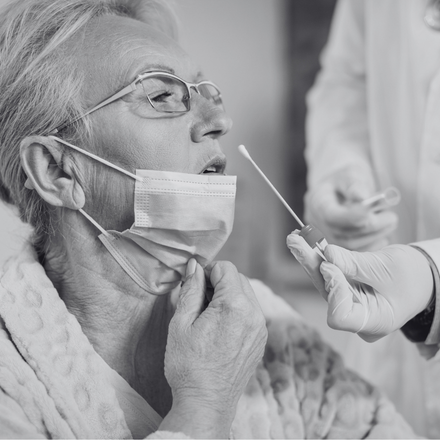
The invisible epidemic: why European health systems are missing two silent killers of older adults

Managing for impact: the role of providers’ associations in shaping the future of healthcare
What our Members say
I have been active in EHMA since the first years of the '90s and I have seen its evolution from a small association of members interested in sharing knowledge on health management practices to the current status of reference and advisory key player for EU, health systems and organisations, stakeholders associations, industry and universities. EHMA is now a unique knowledge hub, policy advisor, community of practice and network of best in class organisations involved in health policy and management. A place where health managers can build their competences, policy-makers and stakeholder associations envision how to implement and sustain change through health management, industry leaders understand how to engage more effectively with health organisations and systems. The right place to nurture and grow health management capabilities and capacity for every stakeholder of health systems.
Prof Federico Lega, University of Milan, Italy
Health management has a crucial function in shaping public health and health system challenges. The Medical University of Varna, Bulgaria had success in collaborating with EHMA on EU-funded projects that has resourced us to create new health management competencies for the future workforce. In addition to all classical definitions, health management is a science dealing with individuals, groups, and society at large. It is an art contributing to the beauty of our lives and an interactive communication process at all levels of institutions and human energy. I have also had the pleasure to chair the South Eastern European Special Interest Group which gives members a space to discuss and tools to address how health systems are managed in our regions.
Prof Todorka Kostadinova, Medical University of Varna, Bulgaria
I enjoy the high level of interaction and engagement in EHMA’s activities, in particular during the annual conference where the panel discussions are rich and well prepared. As a hospital manager and professor of health management, EHMA motivates and inspires me to be creative. You go back home feeling energised from seeing old friends and making new connections, as well as being convinced of serving as EHMA’s ambassador. It’s a strong feeling of interdisciplinary engagement, but it also feels like being part of family-like community.
Prof Sandra C. Buttigieg, MD, University of Malta, Malta
Health workforce has become more essential in operating, managing and maintaining health systems lately, particularly in crisis and emergency situations. European healthcare professions and the workforce need to be high on the agenda of managers and decision makers. The Health Services Management Training Centre, Semmelweis University in Hungary is a longstanding EHMA member, because it connects us with collaborators and experts, with whom we can have complex debates, from whom we can learn and at the end find solutions in various challenging fields of healthcare management.
Dr Eszter Kovács, Health Services Management Training Centre, Semmelweis University, Hungary
As a hospital administrator and health management professor, I see on a daily basis that the healthcare challenges require talented and skilled managers to transform it. the EHMA membership has been beneficial to bring healthcare management research and education to the demanding healthcare services world, promoting healthcare management competencies and knowledge creation.
Dr Alexandre Lourenco, APAH - Association of Portuguese Hospital Managers, Portugal
Many healthcare systems in Europe and beyond are facing similar challenges which require innovative and creative solutions. EHMA’s annual conference, webinars, Programme Directors’ group and other activities and resources provide incredible opportunities for networking, connecting and sharing experiences. A distinct feature of EHMA is the diversity of members with representation from many countries, sectors and different communities of practice – academic, policy-makers, practitioners, managers, leaders and students. The annual conference is a highlight in the calendar year, offering a friendly, fun and learningful environment for emerging and established members to engage, collaborate and meet up with old and new friends. I am proud to be a member of the EHMA Board.
Prof Ann Mahon, University of Manchester, UK
Society evolution, pandemics and ageing modify health needs. So, health policies and services are to change dramatically. EHMA, through webinars, workshops and annual conference provides an excellent insight to a professional changing world, favouring closeness to management innovation and the protagonists of these changes. As a primary care services’ manager, participating in EHMA activities is really worth it and allows to involve oneself in the innovation processes.
Antoni Peris-Grao, MD, Consorci Castelldefels Agents de Salut (CASAP), Spain