
Editorial by Prof Catherine Keller | EHMA newsletter
31 May 2025
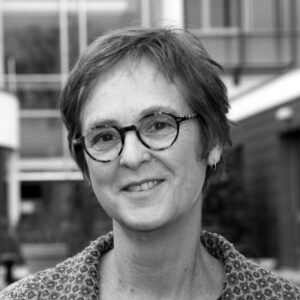 An editorial by Prof Catherine Keller, IDM Director of the Institute of Managemenet, École des Hautes Études en Santé Publique (EHESP) and EHMA Board Member, written for the May 2025 edition of the health management newsletter.
Dear EHMA friends, colleagues and members,
Let me share with you this quote :
“The only path that offers any hope of a better future for all mankind is that of cooperation and partnership, where all social forces – States, the private sector, knowledge and research institutions, and civil society in all its forms – combine their efforts to achieve concrete and achievable goals.’’
Uttered by Kofi Annan, Secretary-General, before the General Assembly of the United Nations more than 20 years ago (24 September 2001), this sentence has never sounded more relevant.
Rarely has humanity’s presence been so anxiety-provoking: deadly wars, major damage to the environment, a rise in extremes and intolerance, latent risks of epidemics… Rarely has the future looked so bleak and uncertain. Those issues of vital importance we are coping with are hard to fully understand, complex to resolve because linked by a strong network of interdependencies. Against such a background, a response exclusively based on competition and individual – even individualistic – performance is likely to prove inadequate to provide appropriate, effective and lasting solutions.
The situation calls for a shared approach around a common interest and project. We need to enhance together a collective energy, to cross our – maybe different but undoubtedly complementary and reconcilable – points of view, and to combine our skills for building a collective performance. Actually, we need strongly to share a common interest and mobilise energy, skills and gifts of all, to combine and cross different viewpoints, to put all our efforts at the service of the common and general interest.
Meaning ‘working together, cooperate – cum operare– is emerging’ – indeed and without angelism- even more strongly as the only way to tackle the scope and complexity of the issues we are facing. Cooperation goes hand in hand with solidarity, efficiency, creates stimulating spaces for innovative joint reflections and equitable access to innovations. Combining talents and resources, enhancing shared and supportive efficiency, cooperation can help us to make our future desirable again.
Cooperation is all about values, methods and assessable outcomes. Cooperation is a combination of state of mind, support for change, tools designed to make feasible a collective project or improve a collective good. Above all, cooperation means acting for the benefit of a common interest.
All of us-healthcare decision makers, managers, healthcare professionals, researchers, – are fully aware that most of healthcare systems in Europe are facing the same problems. Now it’s time for thinking differently and acting differently. ‘Taking action to improve health for all ‘ is the main topic of EHMA’s Annual Conference, taking place from 4-6 June 2025.
Cooperation is the very core of European health and, above all, of EHMA’s core mission:
- Fostering an effective health management for a healthy Europe
- Strengthening ties between European public health and management institutions
- Promoting best practices and contribute to the improvement of health systems across Europe.
As a way to act, cooperation sounds particularly relevant and useful to shape health care systems capable to meet the moving healthcare needs of populations. Thus, hosting with great honour and pleasure, the National Public Health School (EHESP), Rennes, France will host the 30th EHMA Annual Conference. On 3 June, EHESP pre-conference event will be dedicated to ‘Healthcare cooperation from the international to the local scale’.
Combining health research and feedback, the programme develops topics that reflect some of the major values and actions supported by EHESP, involving all the healthcare system stakeholders, patients included:
- Adaptation of healthcare systems to changing needs and to improve health for all: building care pathways
- Multilateral partnership and inverse innovation
- Inter-professional and patients-inclusive collaboration
- Caring for carers to improve care
- Public Health
By promoting collective action, the pre-event invites all of us, professionals from different sectors and countries, to collaborate, innovate and build resilient systems that give priority to citizens within healthcare policy and practice. These topics which will be discussed at the pre – conference event and the conference itself, will embody the commitment of all of us – EHESP, EHMA members and conference attendees – to tackle the crucial challenges facing healthcare systems, by linking strategy and practice, for the benefit of improving health for all.
Let’s take action, let’s cooperate closely, and with purpose, to improve health for all!
Recent News
The invisible epidemic: why European health systems are missing two silent killers of older adults

Managing for impact: the role of providers’ associations in shaping the future of healthcare
What our Members say
I have been active in EHMA since the first years of the '90s and I have seen its evolution from a small association of members interested in sharing knowledge on health management practices to the current status of reference and advisory key player for EU, health systems and organisations, stakeholders associations, industry and universities. EHMA is now a unique knowledge hub, policy advisor, community of practice and network of best in class organisations involved in health policy and management. A place where health managers can build their competences, policy-makers and stakeholder associations envision how to implement and sustain change through health management, industry leaders understand how to engage more effectively with health organisations and systems. The right place to nurture and grow health management capabilities and capacity for every stakeholder of health systems.
Prof Federico Lega, University of Milan, Italy
Health management has a crucial function in shaping public health and health system challenges. The Medical University of Varna, Bulgaria had success in collaborating with EHMA on EU-funded projects that has resourced us to create new health management competencies for the future workforce. In addition to all classical definitions, health management is a science dealing with individuals, groups, and society at large. It is an art contributing to the beauty of our lives and an interactive communication process at all levels of institutions and human energy. I have also had the pleasure to chair the South Eastern European Special Interest Group which gives members a space to discuss and tools to address how health systems are managed in our regions.
Prof Todorka Kostadinova, Medical University of Varna, Bulgaria
I enjoy the high level of interaction and engagement in EHMA’s activities, in particular during the annual conference where the panel discussions are rich and well prepared. As a hospital manager and professor of health management, EHMA motivates and inspires me to be creative. You go back home feeling energised from seeing old friends and making new connections, as well as being convinced of serving as EHMA’s ambassador. It’s a strong feeling of interdisciplinary engagement, but it also feels like being part of family-like community.
Prof Sandra C. Buttigieg, MD, University of Malta, Malta
Health workforce has become more essential in operating, managing and maintaining health systems lately, particularly in crisis and emergency situations. European healthcare professions and the workforce need to be high on the agenda of managers and decision makers. The Health Services Management Training Centre, Semmelweis University in Hungary is a longstanding EHMA member, because it connects us with collaborators and experts, with whom we can have complex debates, from whom we can learn and at the end find solutions in various challenging fields of healthcare management.
Dr Eszter Kovács, Health Services Management Training Centre, Semmelweis University, Hungary
As a hospital administrator and health management professor, I see on a daily basis that the healthcare challenges require talented and skilled managers to transform it. the EHMA membership has been beneficial to bring healthcare management research and education to the demanding healthcare services world, promoting healthcare management competencies and knowledge creation.
Dr Alexandre Lourenco, APAH - Association of Portuguese Hospital Managers, Portugal
Many healthcare systems in Europe and beyond are facing similar challenges which require innovative and creative solutions. EHMA’s annual conference, webinars, Programme Directors’ group and other activities and resources provide incredible opportunities for networking, connecting and sharing experiences. A distinct feature of EHMA is the diversity of members with representation from many countries, sectors and different communities of practice – academic, policy-makers, practitioners, managers, leaders and students. The annual conference is a highlight in the calendar year, offering a friendly, fun and learningful environment for emerging and established members to engage, collaborate and meet up with old and new friends. I am proud to be a member of the EHMA Board.
Prof Ann Mahon, University of Manchester, UK
Society evolution, pandemics and ageing modify health needs. So, health policies and services are to change dramatically. EHMA, through webinars, workshops and annual conference provides an excellent insight to a professional changing world, favouring closeness to management innovation and the protagonists of these changes. As a primary care services’ manager, participating in EHMA activities is really worth it and allows to involve oneself in the innovation processes.
Antoni Peris-Grao, MD, Consorci Castelldefels Agents de Salut (CASAP), Spain