
Editorial by Dr Guido Noto | EHMA newsletter
30 November 2025
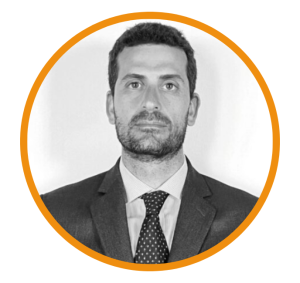 An editorial by Dr Guido Noto, Associate Professor of Performance Management in the Department of Economics at the University of Messina, written for the November 2025 edition of the health management newsletter.
Budget constraints and the need for an integrated health management
We live in a global context in which healthcare budgets are contracting due to multiple external and internal pressures. Externally, competition with other public expenditures – such as national defence – and the reduction of international health aid from the United States and other countries are reshaping public spending priorities. Internally, the rising cost of key production factors – such as certain pharmaceuticals and medical devices – is absorbing an increasing share of public health expenditure.
These dynamics are producing visible consequences, including growing out-of-pocket spending and longer waiting lists. As a result, healthcare organisations and systems across Europe are (again!) called to improve their capacity to reduce waste and generate value with progressively fewer resources.
In many European countries, efforts to curb waste through efficiency and productivity have already been extensively pursued, generating savings but also unintended consequences. New strategies are therefore required to support health management at both system and organizational levels. Sir Muir Gray has repeatedly emphasised that waste reduction depends primarily on quality – when services fail to achieve outcomes that matter to patients (e.g., avoidable readmissions that duplicate resource use) – and on resource allocation – when resources could instead be directed towards services that generate greater value (e.g., avoiding inappropriate care).
This ‘war on waste‘ requires investment, not the cutback measures that often appear politically attractive as short-term solutions focused on system inefficiencies. When effectively implemented, such investments yield long-term gains in terms of waste reduction; this is the logic underpinning the Italian reform known as DM 77/2022.
Therefore, the question is: What should be done in the short run? According to the WHO, key strategies include protecting healthcare budgets from external and internal shocks, strengthening priority-setting processes, and reinforcing health technology assessment.
Moreover, as argued by a group of Italian scholars advocating for a reform of the NHS, it is essential to manage citizens’ expectations. This requires the courage to clearly define the boundaries of NHS action – that is, the rights and services that are effectively guaranteed to everyone. It means moving beyond the abstract rhetoric of promising everything deemed necessary or appropriate, and instead committing to guarantee only those services that citizens can realistically obtain.
To conclude this brief overview with some implications for health managers, they are increasingly required to integrate skills and competencies that already exist within the health system or organization but are often confined within disciplinary and organisational silos. These include population health, financial management, priority setting, (evidence-based) performance management, HTA, and communication, among others.
Recent News
EHMA announces transition in its Presidency

Editorial by Dr Odessa Petit dit DARIEL | EHMA Newsletter

EHMA calls for digital medication management to become a strategic investment priority in the next EU budget
What our Members say
I have been active in EHMA since the first years of the '90s and I have seen its evolution from a small association of members interested in sharing knowledge on health management practices to the current status of reference and advisory key player for EU, health systems and organisations, stakeholders associations, industry and universities. EHMA is now a unique knowledge hub, policy advisor, community of practice and network of best in class organisations involved in health policy and management. A place where health managers can build their competences, policy-makers and stakeholder associations envision how to implement and sustain change through health management, industry leaders understand how to engage more effectively with health organisations and systems. The right place to nurture and grow health management capabilities and capacity for every stakeholder of health systems.
Prof Federico Lega, University of Milan, Italy
Health management has a crucial function in shaping public health and health system challenges. The Medical University of Varna, Bulgaria had success in collaborating with EHMA on EU-funded projects that has resourced us to create new health management competencies for the future workforce. In addition to all classical definitions, health management is a science dealing with individuals, groups, and society at large. It is an art contributing to the beauty of our lives and an interactive communication process at all levels of institutions and human energy. I have also had the pleasure to chair the South Eastern European Special Interest Group which gives members a space to discuss and tools to address how health systems are managed in our regions.
Prof Todorka Kostadinova, Medical University of Varna, Bulgaria
I enjoy the high level of interaction and engagement in EHMA’s activities, in particular during the annual conference where the panel discussions are rich and well prepared. As a hospital manager and professor of health management, EHMA motivates and inspires me to be creative. You go back home feeling energised from seeing old friends and making new connections, as well as being convinced of serving as EHMA’s ambassador. It’s a strong feeling of interdisciplinary engagement, but it also feels like being part of family-like community.
Prof Sandra C. Buttigieg, MD, University of Malta, Malta
Health workforce has become more essential in operating, managing and maintaining health systems lately, particularly in crisis and emergency situations. European healthcare professions and the workforce need to be high on the agenda of managers and decision makers. The Health Services Management Training Centre, Semmelweis University in Hungary is a longstanding EHMA member, because it connects us with collaborators and experts, with whom we can have complex debates, from whom we can learn and at the end find solutions in various challenging fields of healthcare management.
Dr Eszter Kovács, Health Services Management Training Centre, Semmelweis University, Hungary
As a hospital administrator and health management professor, I see on a daily basis that the healthcare challenges require talented and skilled managers to transform it. the EHMA membership has been beneficial to bring healthcare management research and education to the demanding healthcare services world, promoting healthcare management competencies and knowledge creation.
Dr Alexandre Lourenco, APAH - Association of Portuguese Hospital Managers, Portugal
Many healthcare systems in Europe and beyond are facing similar challenges which require innovative and creative solutions. EHMA’s annual conference, webinars, Programme Directors’ group and other activities and resources provide incredible opportunities for networking, connecting and sharing experiences. A distinct feature of EHMA is the diversity of members with representation from many countries, sectors and different communities of practice – academic, policy-makers, practitioners, managers, leaders and students. The annual conference is a highlight in the calendar year, offering a friendly, fun and learningful environment for emerging and established members to engage, collaborate and meet up with old and new friends. I am proud to be a member of the EHMA Board.
Prof Ann Mahon, University of Manchester, UK
Society evolution, pandemics and ageing modify health needs. So, health policies and services are to change dramatically. EHMA, through webinars, workshops and annual conference provides an excellent insight to a professional changing world, favouring closeness to management innovation and the protagonists of these changes. As a primary care services’ manager, participating in EHMA activities is really worth it and allows to involve oneself in the innovation processes.
Antoni Peris-Grao, MD, Consorci Castelldefels Agents de Salut (CASAP), Spain
