
Editorial by Prof Tiago Correia | EHMA newsletter
30 April 2025
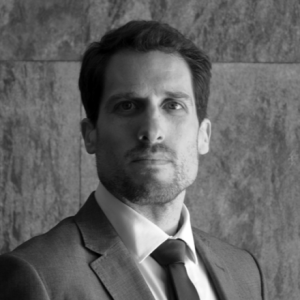 An editorial by Prof Tiago Correia, Professor of Global Public Health at Institute of Hygiene and Tropical Medicine – NOVA University of Lisbon and former EHMA Board Member, written for the April 2025 edition of the health management newsletter.
A shifting world, a shared responsibility: health management in the age of geopolitical disruption
As the world grapples with a cascade of geopolitical and economic shocks, health systems find themselves increasingly at the frontlines not just of disease, but of diplomacy, economics, and global power shifts. The events of 2025 mark a turning point. The re-election of Donald Trump and his administration’s tariff regime have brought a new urgency to the conversation on ‘economic warfare’ and its implications for global health. In parallel, the erosion of U.S. leadership in global health governance has left many low- and middle-income countries (LMICs) scrambling to reconfigure their research and funding landscapes.
This editorial reflects on recent developments, challenges, and opportunities shaping the field of health management. It calls on EHMA members and partners to reassert health leadership where it’s needed most through collaboration, innovation, and a rethinking of how health policy is governed, funded, and practiced.
Economic warfare: an emerging health determinant
In the past, public health responded to the visible destruction of armed conflict. Today, we face a more insidious adversary: economic warfare. Trade sanctions, currency manipulation, and targeted tariffs now threaten the supply chains of medicines, access to healthcare, and even life expectancy in vulnerable populations. Evidence already suggests that sanctions can lead to a measurable decline in population health, disproportionately affecting vulnerable populations.
Health management professionals must now be equipped not only to plan hospitals and health budgets, but to measure and mitigate the health impacts of global economic decisions. This demands a new generation of evidence that is robust, timely, and sensitive to political and economic volatility.
The unravelling of multilateralism: what happens when leadership retreats?
The United States has long been a cornerstone of global health financing, shaping priorities and sustaining large-scale programmes like PEPFAR. But as its policies grow increasingly domestic and security-focused, a vacuum is emerging. Cuts to WHO and the failure to reauthorise core initiatives undermine multilateral coordination at precisely the moment we need it most.
For low- and middle-income countries (LMICs), this presents a dual challenge and opportunity: the need to rapidly diversify funding and take control of their own research agendas. It also opens space for regional bodies such as the Africa CDC to evolve into central platforms for coordination, policymaking, and capacity-building.
For other high-income countries (HICs), particularly in Europe, this moment demands a rethinking of roles and responsibilities. With U.S. influence receding, the European Union and its Member States are uniquely positioned to assume greater leadership in sustaining global public goods, financing research collaborations, and defending multilateral approaches to health governance. However, EU responses have often been cautious or insufficient in scale. The recognition of global health as a strategic priority exists, but matching this recognition with sustained investment, strategic foresight, and coherent external action remains a work in progress. If Europe is to lead, it must act not only as a funder, but as a convener of global dialogue and a champion of equitable partnerships.
Challenges for health managers: planning in an unstable landscape
In this changing context, health managers must operate in a terrain marked by fragmentation, uncertainty, and contested accountability. The impact is felt across core areas of health system governance: supply chain reliability, human resource planning, infrastructure maintenance, and the sustainability of essential health programmes.
The imperative is clear: we must build more resilient systems that can weather not only pandemics but political and economic storms. This includes strengthening data systems, promoting health policy research that reflects local realities, and fostering cross-country learning beyond the confines of traditional donor relationships.
Toward a new model of global health governance
What comes next must be rooted in equity, accountability, and shared governance. This applies as much to relationships between high-income and low-income countries as it does within the structures of health research, funding, and management.
South-South cooperation, regional networks, and local leadership are no longer optional; they are essential. The rise of private and philanthropic funders introduces new dynamics, but also risks, particularly if market priorities overshadow community needs. Transparency, stewardship, and inclusivity must anchor all new partnerships.
A call to health managers and policymakers
At EHMA, we believe that the current moment demands more than reaction; it calls for reflection, adaptation, and bold leadership. We encourage our members to:
- Engage with emerging research on the health effects of economic policies;
- Strengthen collaborations that amplify LMIC leadership and regional coordination;
- Advocate for health in all policies, including economic and trade decisions;
- Co-produce solutions with communities and ensure equity remains at the centre of all we do.
Health management must evolve to meet the challenges of a reshaped world. And while the future is uncertain, it is also rich with possibility if we choose to act, together.
Recent News
EHMA announces transition in its Presidency

Editorial by Dr Odessa Petit dit DARIEL | EHMA Newsletter

EHMA calls for digital medication management to become a strategic investment priority in the next EU budget
What our Members say
I have been active in EHMA since the first years of the '90s and I have seen its evolution from a small association of members interested in sharing knowledge on health management practices to the current status of reference and advisory key player for EU, health systems and organisations, stakeholders associations, industry and universities. EHMA is now a unique knowledge hub, policy advisor, community of practice and network of best in class organisations involved in health policy and management. A place where health managers can build their competences, policy-makers and stakeholder associations envision how to implement and sustain change through health management, industry leaders understand how to engage more effectively with health organisations and systems. The right place to nurture and grow health management capabilities and capacity for every stakeholder of health systems.
Prof Federico Lega, University of Milan, Italy
Health management has a crucial function in shaping public health and health system challenges. The Medical University of Varna, Bulgaria had success in collaborating with EHMA on EU-funded projects that has resourced us to create new health management competencies for the future workforce. In addition to all classical definitions, health management is a science dealing with individuals, groups, and society at large. It is an art contributing to the beauty of our lives and an interactive communication process at all levels of institutions and human energy. I have also had the pleasure to chair the South Eastern European Special Interest Group which gives members a space to discuss and tools to address how health systems are managed in our regions.
Prof Todorka Kostadinova, Medical University of Varna, Bulgaria
I enjoy the high level of interaction and engagement in EHMA’s activities, in particular during the annual conference where the panel discussions are rich and well prepared. As a hospital manager and professor of health management, EHMA motivates and inspires me to be creative. You go back home feeling energised from seeing old friends and making new connections, as well as being convinced of serving as EHMA’s ambassador. It’s a strong feeling of interdisciplinary engagement, but it also feels like being part of family-like community.
Prof Sandra C. Buttigieg, MD, University of Malta, Malta
Health workforce has become more essential in operating, managing and maintaining health systems lately, particularly in crisis and emergency situations. European healthcare professions and the workforce need to be high on the agenda of managers and decision makers. The Health Services Management Training Centre, Semmelweis University in Hungary is a longstanding EHMA member, because it connects us with collaborators and experts, with whom we can have complex debates, from whom we can learn and at the end find solutions in various challenging fields of healthcare management.
Dr Eszter Kovács, Health Services Management Training Centre, Semmelweis University, Hungary
As a hospital administrator and health management professor, I see on a daily basis that the healthcare challenges require talented and skilled managers to transform it. the EHMA membership has been beneficial to bring healthcare management research and education to the demanding healthcare services world, promoting healthcare management competencies and knowledge creation.
Dr Alexandre Lourenco, APAH - Association of Portuguese Hospital Managers, Portugal
Many healthcare systems in Europe and beyond are facing similar challenges which require innovative and creative solutions. EHMA’s annual conference, webinars, Programme Directors’ group and other activities and resources provide incredible opportunities for networking, connecting and sharing experiences. A distinct feature of EHMA is the diversity of members with representation from many countries, sectors and different communities of practice – academic, policy-makers, practitioners, managers, leaders and students. The annual conference is a highlight in the calendar year, offering a friendly, fun and learningful environment for emerging and established members to engage, collaborate and meet up with old and new friends. I am proud to be a member of the EHMA Board.
Prof Ann Mahon, University of Manchester, UK
Society evolution, pandemics and ageing modify health needs. So, health policies and services are to change dramatically. EHMA, through webinars, workshops and annual conference provides an excellent insight to a professional changing world, favouring closeness to management innovation and the protagonists of these changes. As a primary care services’ manager, participating in EHMA activities is really worth it and allows to involve oneself in the innovation processes.
Antoni Peris-Grao, MD, Consorci Castelldefels Agents de Salut (CASAP), Spain
