
Leadership Academy
8-11 March 2027 - Ghent, Belgium
€ 3,500.00 (Member) - € 4,300.00 (Non Member)
Overview
The EHMA Leadership Academy combines academic insight, practical application, and direct exposure to organisations and leaders confronting real-world challenges. Built specifically around health organisations, the programme recognises the unique complexity of professional environments where expertise, authority, and responsibility are distributed. It offers a complete perspective on leadership by moving deliberately from leading organisations, to leading teams, to leading oneself.
What participants will learn
By the end of the Leadership Academy, participants will be better equipped to:
- Lead beyond formal authority, recognising how complexity, professional expertise, and different interests shape leadership in health organisations.
- Create direction and translate it into action, connecting leadership ambition with people, teams, and organisational choices.
- Lead multidisciplinary teams, understanding how different professional perspectives can be brought together around shared objectives.
- Build the conditions for high-performing teams, moving beyond individual performance to consider how teams are structured, supported, and led.
- Connect leadership with service delivery, understanding how decisions about people, teams, and organisation translate into the design and delivery of services.
- Develop a clearer understanding of their own leadership, reflecting critically on behaviours, choices, and discipline, and defining what they want to change, build, and leave behind.
Why you should attend?
The EHMA Leadership Academy combines academic insight, practical application and direct exposure to organisations and leaders confronting real challenges. The Academy offers participants:
- A leadership programme built specifically around health organisations, recognising the particular complexity of professional environments where expertise, authority and responsibility are distributed.
- A complete perspective on leadership, moving deliberately from leading organisations, to leading teams, to leading oneself.
- Learning grounded in practice, connecting leadership concepts with high-performing teams, service design and examples of how organisational choices are translated into reality.
- Direct engagement with leadership in action, through conversations with senior leaders and visits to organisations that provide concrete examples of complexity, organisational design and vision.
- Time and space to think, away from day-to-day operational pressures, with a small cohort of peers facing comparable leadership responsibilities.
- An opportunity to turn reflection into personal direction, leaving with a clearer understanding of what participants want to do differently in their own organisations and leadership roles.
Who is this programme for?
The Academy is designed for health managers and professionals who already hold significant organisational, managerial, or clinical responsibility and are ready to take the next step in their leadership development. It is particularly relevant for those who have built their experience primarily through practice and responsibility rather than extensive formal executive education. Suitable roles include:
- Senior and mid-to-senior healthcare managers.
- Clinical and professional leaders with organisational or team responsibilities.
- Heads of departments, services, or functions.
- Managers and leaders preparing to assume broader organisational responsibilities.
Practical information
Duration: 4 days (8-11 March 2027), residential
Location: Ghent, Belgium
Format: Interactive sessions, executive conversations, reflections, site visits
Cohort: 12–20 senior participants
Detailed Programme
Day 1 – Leading organisations
- Welcome and Cohort Introduction: An informal opening allowing participants to meet, establish the cohort, and prepare for the intensive learning experience ahead.
- Leading organisations beyond ordinary management (Prof. Federico Lega): Explores what we know, what we don’t know, and how to leave your mark by doing the right things and things right using methods, tools, and personal leadership power.
- Leadership talk: Navigating within complexity: An interview-led conversation with senior leaders responsible for navigating complex organisations or systems, challenging the organisational leadership themes explored during the afternoon.
Day 2 – From organisations to teams
- Leadership and people in practice & Site visit: Participants visit Ghent University Hospital (UZ Gent) to explore its new environment, observing how architecture and design shape patient experience and wellbeing. This is followed by a strategic conversation with hospital leadership reflecting on design choices and how the organisation supports and enables its strategy.
- Sense-making (Prof. Federico Lega): Explores why any health organisation is more than its professionals, yet will never be better than what they want it to become, setting the scene for team leadership.
- Leading people across the team lifecycle (Prof. Federica Morandi): Explores how leaders manage the full lifecycle of their teams, from joining and contributing to evolving, while balancing individual incentives with team-based recognition.
Day 3 – From teams to oneself
- Leading teams [continued] (Prof. Federica Morandi): Continuation and completion of the Leading Teams component, complemented by discussions on performance evaluation plans.
- High-performing organisations — (Prof. Brecht Cardoen & Prof. Paul Gemmel): Focuses on operations and value-based healthcare, examining what makes certain organisations consistently outperform their competitors.
- Leading oneself (Prof. Federico Lega): Examines the inner fire, metrics of great leadership, and what defines a great leader.
- Site visit — Leadership in practice: A visit to a residential facility for older people that challenges conventional care-centred models by starting from the experience of living, exploring vision and long-lasting organisational impact.
Day 4 – Leading oneself: from reflection to direction
- Leading oneself [continued] (Prof. Federico Lega): Pragmatic reflections on leadership styles, good practices, and organisational cultures.
- Wrap-up and sharing of epiphanies: Dedicated time to connect the progression from organisation, team, self, allowing participants to reflect on what they want to take back, change, build, and leave behind.
FACULTY
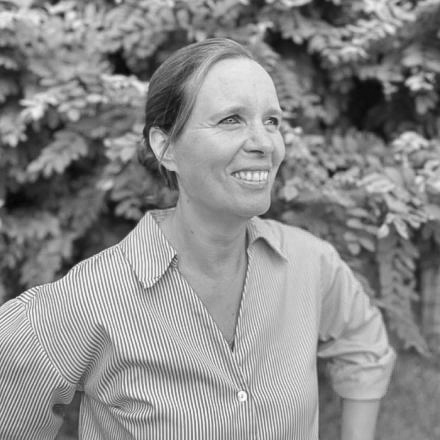
Prof Melissa De Regge
Prof Melissa De Regge
Prof Melissa De Regge is a Coordinating Staff and Policy Expert within the Strategic Policy Unit of Ghent University Hospital, where she leads and supports strategic initiatives aimed at improving healthcare delivery, organisational performance and patient-centred care. Acting as a bridge between clinical practice and policy, she contributes to the development and implementation of projects that strengthen healthcare management and quality improvement across the organisation.
With more than 13 years of clinical experience as a nurse in critical care services, Prof De Regge combines frontline healthcare expertise with a strong background in health management research. Her work focuses on the management and operational dimensions of healthcare delivery, governance and service improvement, areas in which she has authored several peer-reviewed scientific publications.
Prof De Regge holds a Master of Science in Healthcare Management and Policy and a PhD in Applied Economics from Ghent University. She is Chair of the Healthcare Management Research Centre (CuraMa) and a member of the Center for Service Intelligence (CSI), two interdisciplinary research centres dedicated to healthcare management and service innovation. She also teaches organisational management at Ghent University.
In addition to her research and teaching activities, Prof De Regge serves on the core team of the MSc in Healthcare Management and Policy programme, holds several quality assurance and curriculum leadership roles, and sits on the boards of the Belgian Association of Ambulatory Surgery and the Alumni Association for the MSc in Healthcare Management and Policy.
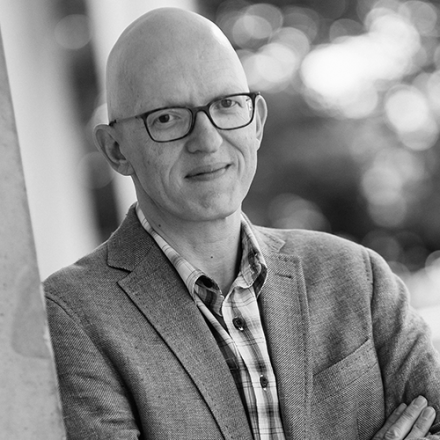
Prof Paul Gemmel
Prof Paul Gemmel
Prof Paul Gemmel is Dean of the Faculty of Economics and Business Administration at Ghent University and Professor of Service and Healthcare Management. His research and teaching focus on service and healthcare operations management, with particular emphasis on understanding how the design of service delivery systems influences customer and patient experiences within healthcare organisations.
In addition to his role as Dean, Prof Gemmel is an associated member of the Department of Public Health and Primary Care within the Faculty of Medicine and Health Sciences, where he serves as Programme Director of the Master of Science in Healthcare Management and Policy. He is also a Research Fellow at Vlerick Business School.
Prof Gemmel is a recognised leader in healthcare management research and has played a key role in establishing several influential research centres, including the Center for Service Intelligence (CSI), the CuraMa Healthcare Management Research Centre at Ghent University, and the MINOZ research centre for hospital management at Vlerick Business School. His work has contributed significantly to advancing knowledge on healthcare operations, service innovation and organisational performance.
Alongside his academic activities, he holds a number of governance and advisory roles within the Belgian health and care sector, including membership of the governing boards of Broeders van Liefde and Zorggroep H. Hart, and the General Assembly of OLV Aalst. He has undertaken research appointments and sabbaticals at leading international institutions, including Tilburg University, Karlstad University, HEC Montréal and Arizona State University.

Prof Federico Lega
Prof Federico Lega
Prof Federico Lega is a Full Professor of Health Administration at the Public Health Department at Milan University, where he runs all courses in healthcare management and policy for medical students and leads the Research Centre in Health Administration (HEAD).
From 2007 to 2014 he has been the Head of executive education for health managers, clinicians and medical industry leaders at the Bocconi School of Management (SDA).
Since 2015, he is acting as Editor in Chief of the journal Health Services Management Research, Associate Editor of BMC Health Services Research and Medical Care Research Review. He has published eight books and over 150 articles in journals.
As a consultant, he has advised health systems on health policy matters and governance issues, several hospitals and networks in re-organisations, strategy-making processes, value-based approaches, economic evaluations, and process management, both at the national and international level.
In the last ten years, he has advised several companies in the medical industry on their transformation toward value-based models and on the development of effective market-access initiatives. Since 2002 he has coordinated over fifteen initiatives of duality or study tours, involving the exchange of managers and senior clinicians between countries (Italy, UK, USA, Germany and France). He currently sits on the boards of hospitals and local health authorities, advises health departments of regions, national health agencies and insurances, and works as a consultant for WHO.

Prof Federica Morandi
Prof Federica Morandi
Prof Federica Morandi is Professor of Management at Università Cattolica del Sacro Cuore, Faculty of Economics, Department of Management Studies. She is the Programme Chair of the bachelor degree of Economia e Gestione dei Servizi (Economics and Service Management) at Università Cattolica del Sacro Cuore.
Since 2020 she is the Director of the Academic Programs in Altems (Graduate School of Economics and Management of Healthcare Systems) at the same university. She is also responsible for the research activities of Patient Advocacy Associations Lab and Clinical Trial Management Lab at Altems.
She received two awards for research activities from the Academy of Management (2011) and from Assioa (Italian Association of Organization Studies) (2010). She has been a visiting scholar (short term) at ISCTE-IUL Lisbon (Portugal) and at Tillburg University (The Netherlands) at the Department of Organization Studies – School of Social Behavioural Sciences. Her research interests focus both on organizational models in healthcare and on healthcare workforce.
Prof Federica Morandi co authored more than 30 scientific papers both in international and national peer-reviewed journals and about 10 book chapters. She is also author of a monography entitled “Managerial solutions to hospital challenges” edited by Nova Science Publishers, 2016. Prof Federica Morandi is co editor of a book series dedicated to the healthcare management and she is associate editor at Health Service Management Research journal.
She obtained a PhD in Economic and Management of Healthcare Organizations at Università Cattolica del Sacro Cuore.
What our Members say
I have been active in EHMA since the first years of the '90s and I have seen its evolution from a small association of members interested in sharing knowledge on health management practices to the current status of reference and advisory key player for EU, health systems and organisations, stakeholders associations, industry and universities. EHMA is now a unique knowledge hub, policy advisor, community of practice and network of best in class organisations involved in health policy and management. A place where health managers can build their competences, policy-makers and stakeholder associations envision how to implement and sustain change through health management, industry leaders understand how to engage more effectively with health organisations and systems. The right place to nurture and grow health management capabilities and capacity for every stakeholder of health systems.
Prof Federico Lega, University of Milan, Italy
Health management has a crucial function in shaping public health and health system challenges. The Medical University of Varna, Bulgaria had success in collaborating with EHMA on EU-funded projects that has resourced us to create new health management competencies for the future workforce. In addition to all classical definitions, health management is a science dealing with individuals, groups, and society at large. It is an art contributing to the beauty of our lives and an interactive communication process at all levels of institutions and human energy. I have also had the pleasure to chair the South Eastern European Special Interest Group which gives members a space to discuss and tools to address how health systems are managed in our regions.
Prof Todorka Kostadinova, Medical University of Varna, Bulgaria
I enjoy the high level of interaction and engagement in EHMA’s activities, in particular during the annual conference where the panel discussions are rich and well prepared. As a hospital manager and professor of health management, EHMA motivates and inspires me to be creative. You go back home feeling energised from seeing old friends and making new connections, as well as being convinced of serving as EHMA’s ambassador. It’s a strong feeling of interdisciplinary engagement, but it also feels like being part of family-like community.
Prof Sandra C. Buttigieg, MD, University of Malta, Malta
Health workforce has become more essential in operating, managing and maintaining health systems lately, particularly in crisis and emergency situations. European healthcare professions and the workforce need to be high on the agenda of managers and decision makers. The Health Services Management Training Centre, Semmelweis University in Hungary is a longstanding EHMA member, because it connects us with collaborators and experts, with whom we can have complex debates, from whom we can learn and at the end find solutions in various challenging fields of healthcare management.
Dr Eszter Kovács, Health Services Management Training Centre, Semmelweis University, Hungary
As a hospital administrator and health management professor, I see on a daily basis that the healthcare challenges require talented and skilled managers to transform it. the EHMA membership has been beneficial to bring healthcare management research and education to the demanding healthcare services world, promoting healthcare management competencies and knowledge creation.
Dr Alexandre Lourenco, APAH - Association of Portuguese Hospital Managers, Portugal
Many healthcare systems in Europe and beyond are facing similar challenges which require innovative and creative solutions. EHMA’s annual conference, webinars, Programme Directors’ group and other activities and resources provide incredible opportunities for networking, connecting and sharing experiences. A distinct feature of EHMA is the diversity of members with representation from many countries, sectors and different communities of practice – academic, policy-makers, practitioners, managers, leaders and students. The annual conference is a highlight in the calendar year, offering a friendly, fun and learningful environment for emerging and established members to engage, collaborate and meet up with old and new friends. I am proud to be a member of the EHMA Board.
Prof Ann Mahon, University of Manchester, UK
Society evolution, pandemics and ageing modify health needs. So, health policies and services are to change dramatically. EHMA, through webinars, workshops and annual conference provides an excellent insight to a professional changing world, favouring closeness to management innovation and the protagonists of these changes. As a primary care services’ manager, participating in EHMA activities is really worth it and allows to involve oneself in the innovation processes.
Antoni Peris-Grao, MD, Consorci Castelldefels Agents de Salut (CASAP), Spain
