
Leading the way: how Italy and Belgium are pioneering the digital future of medication management in Europe
25 February 2026
The European healthcare landscape is at a critical turning point. While the European Union is working on the final stages of the EU pharmaceutical legislation – with a provisional political agreement awaiting formal endorsement – and negotiations continue on the Critical Medicines Act, the focus on supply chain resilience, transparency, and patient safety has never been higher. As these legislative frameworks are still evolving, several Member States are already translating policy ambition into structural reform. These developments are in line with the core advocacy objectives of the EPACT Alliance, led by EHMA, which champions the digitalisation of hospital medication management as a strategic pillar for a safer, more resilient European Health Union.
Italy and Belgium have emerged as frontrunners, demonstrating that the digitalisation of medication management is no longer a future goal but a strategic necessity being implemented today.
Both Italy and Belgium are implementing national systems that directly anticipate the upcoming EU requirements for data transparency and supply chain visibility. These initiatives move healthcare systems away from reactive crisis management toward a model of proactive supply chain intelligence.
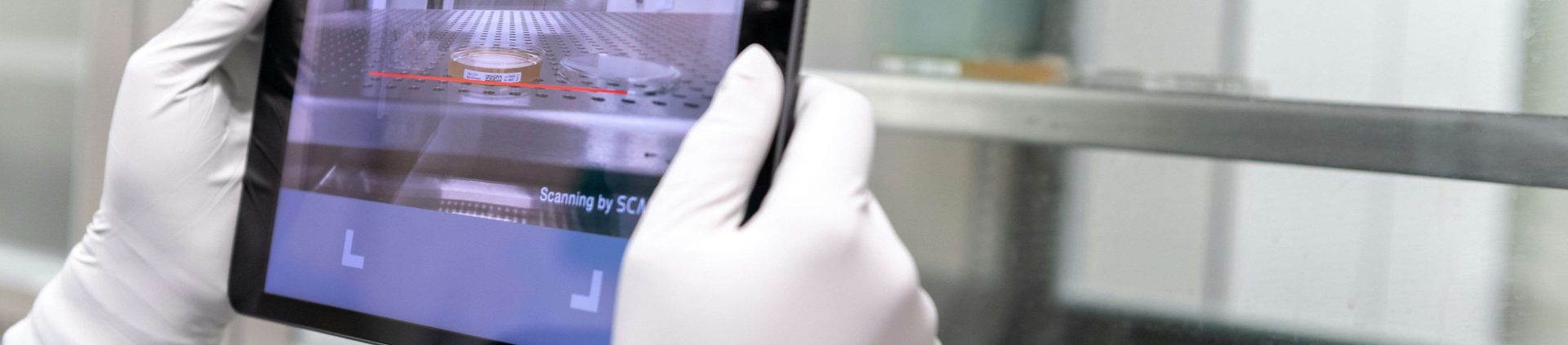
- Italy’s automation powerhouse: Through its central procurement body, Consip, Italy has launched a tender for a €1.13 billion strategic framework agreement. This represents one of Europe’s largest public investments in hospital micrologistics, focusing on the automation of the entire medication chain—from central pharmacy robots to automated ward cabinets.
- Belgium’s data intelligence: Belgium has become the first EU Member State to implement a national, mandatory digital system to monitor medication stock levels across the entire supply chain. Its Stock Monitoring Tool (SMT) collects real-time quantitative data from hospitals, wholesalers, and industry players.
The role of hospital pharmacists as ‘sentinels’
A defining commonality between these two models is the strategic repositioning of the hospital pharmacist. By integrating local hospital operations into national digital and automated infrastructures, these professionals are being elevated from traditional ‘inventory managers’ to national supply chain sentinels.
In Italy, the focus is on empowerment through automation. By deploying pharmacy robots and automated ward cabinets, the initiative systematically reduces the manual administrative burden on healthcare professionals. This shift allows pharmacists to move away from repetitive logistical tasks and focus their expertise on clinical oversight, patient safety, and high-level resource management.
In Belgium, the focus is on empowerment through intelligence. Starting 1 July 2026, mandatory daily reporting of stock levels and dispensing patterns will place hospital pharmacists at the centre of a real-time national alert system. This enables them to detect emerging shortages early and coordinate responses across the entire health system rather than just within their own facility.
Together, these developments show that whether through physical automation or digital data-sharing, the goal is the same: providing pharmacists with the tools and the time to protect the medicine supply chain.
A blueprint for the Member States
These national initiatives provide a concrete, scalable blueprint for other European countries. By investing early in digital medication management infrastructures, Member States can:
- Reduce waste: Optimised inventory levels and better management of expiry dates minimise public healthcare resource loss.
- Strengthen resilience: Real-time visibility into stocks at both the hospital and ward levels allows for faster identification of critical shortages.
- Enhance safety: Digitalisation ensures better traceability and accountability across the entire medication pathway, a critical factor for the management of controlled substances where precision and oversight are paramount.
Find out more
Read EHMA’s Position Paper on enhancing national capacity to monitor hospital medicine inventories.
Discover about funding of these transitions in our paper on Strategic Investment & EU Funding
Access our practical How-To Managers’ Guide for hospital leaders.
Recent News
EHMA announces transition in its Presidency

Editorial by Dr Odessa Petit dit DARIEL | EHMA Newsletter

EHMA calls for digital medication management to become a strategic investment priority in the next EU budget
What our Members say
I have been active in EHMA since the first years of the '90s and I have seen its evolution from a small association of members interested in sharing knowledge on health management practices to the current status of reference and advisory key player for EU, health systems and organisations, stakeholders associations, industry and universities. EHMA is now a unique knowledge hub, policy advisor, community of practice and network of best in class organisations involved in health policy and management. A place where health managers can build their competences, policy-makers and stakeholder associations envision how to implement and sustain change through health management, industry leaders understand how to engage more effectively with health organisations and systems. The right place to nurture and grow health management capabilities and capacity for every stakeholder of health systems.
Prof Federico Lega, University of Milan, Italy
Health management has a crucial function in shaping public health and health system challenges. The Medical University of Varna, Bulgaria had success in collaborating with EHMA on EU-funded projects that has resourced us to create new health management competencies for the future workforce. In addition to all classical definitions, health management is a science dealing with individuals, groups, and society at large. It is an art contributing to the beauty of our lives and an interactive communication process at all levels of institutions and human energy. I have also had the pleasure to chair the South Eastern European Special Interest Group which gives members a space to discuss and tools to address how health systems are managed in our regions.
Prof Todorka Kostadinova, Medical University of Varna, Bulgaria
I enjoy the high level of interaction and engagement in EHMA’s activities, in particular during the annual conference where the panel discussions are rich and well prepared. As a hospital manager and professor of health management, EHMA motivates and inspires me to be creative. You go back home feeling energised from seeing old friends and making new connections, as well as being convinced of serving as EHMA’s ambassador. It’s a strong feeling of interdisciplinary engagement, but it also feels like being part of family-like community.
Prof Sandra C. Buttigieg, MD, University of Malta, Malta
Health workforce has become more essential in operating, managing and maintaining health systems lately, particularly in crisis and emergency situations. European healthcare professions and the workforce need to be high on the agenda of managers and decision makers. The Health Services Management Training Centre, Semmelweis University in Hungary is a longstanding EHMA member, because it connects us with collaborators and experts, with whom we can have complex debates, from whom we can learn and at the end find solutions in various challenging fields of healthcare management.
Dr Eszter Kovács, Health Services Management Training Centre, Semmelweis University, Hungary
As a hospital administrator and health management professor, I see on a daily basis that the healthcare challenges require talented and skilled managers to transform it. the EHMA membership has been beneficial to bring healthcare management research and education to the demanding healthcare services world, promoting healthcare management competencies and knowledge creation.
Dr Alexandre Lourenco, APAH - Association of Portuguese Hospital Managers, Portugal
Many healthcare systems in Europe and beyond are facing similar challenges which require innovative and creative solutions. EHMA’s annual conference, webinars, Programme Directors’ group and other activities and resources provide incredible opportunities for networking, connecting and sharing experiences. A distinct feature of EHMA is the diversity of members with representation from many countries, sectors and different communities of practice – academic, policy-makers, practitioners, managers, leaders and students. The annual conference is a highlight in the calendar year, offering a friendly, fun and learningful environment for emerging and established members to engage, collaborate and meet up with old and new friends. I am proud to be a member of the EHMA Board.
Prof Ann Mahon, University of Manchester, UK
Society evolution, pandemics and ageing modify health needs. So, health policies and services are to change dramatically. EHMA, through webinars, workshops and annual conference provides an excellent insight to a professional changing world, favouring closeness to management innovation and the protagonists of these changes. As a primary care services’ manager, participating in EHMA activities is really worth it and allows to involve oneself in the innovation processes.
Antoni Peris-Grao, MD, Consorci Castelldefels Agents de Salut (CASAP), Spain
